Income Tax in India: practical guide for individuals and salaried taxpayers
Understand tax regimes, ITR forms, salary taxation, deductions, AIS/Form 26AS, filing, refunds and the tools that help you calculate before you file.
Start here: ITR filing guide, ITR-1 vs ITR-2, Old vs New Tax Regime, AIS vs Form 26AS reconciliation, ITR refund status, bank account pre-validation for refunds, and the tax regime calculator.
Editorial standards: About TaxNexus · Editorial Policy · Disclaimer
Income tax compliance is easier when you separate it into four questions: what income is taxable, which tax regime applies, which return form is appropriate, and whether the figures reported by employers/banks match the tax portal records. This page brings those steps together and links to detailed TaxNexus guides and calculators.
Old vs New Tax Regime Calculator
ITR-1 vs ITR-2 guide
1. Assessment Year 2026-27: tax regime basics
For AY 2026-27, the Income Tax Department identifies the new tax regime under section 115BAC as the default regime for eligible individuals and other specified persons. Eligible taxpayers can choose the old regime subject to the applicable rules and filing requirements. Non-business taxpayers can generally make the regime choice in the return, while taxpayers with eligible business or professional income have additional Form 10-IEA requirements for opting out of the default regime.
New tax regime slabs for AY 2026-27
| Total income slab | Rate |
|---|---|
| Up to ₹4,00,000 | Nil |
| ₹4,00,001 – ₹8,00,000 | 5% |
| ₹8,00,001 – ₹12,00,000 | 10% |
| ₹12,00,001 – ₹16,00,000 | 15% |
| ₹16,00,001 – ₹20,00,000 | 20% |
| ₹20,00,001 – ₹24,00,000 | 25% |
| Above ₹24,00,000 | 30% |
The Income Tax Department also states that the section 87A rebate under the new regime for AY 2026-27 is available up to the prescribed conditions for total income up to ₹12 lakh. Special-rate income and other conditions can affect the final result, so use the calculator as an estimate and verify the return computation before filing.
2. Old regime vs new regime: what actually changes?
The comparison is not only about slab rates. The old regime generally allows a wider set of exemptions and deductions, while the new regime uses different slab rates and permits a more limited set of deductions. A taxpayer with substantial eligible deductions may get a different outcome from someone with the same gross salary but few deductions.
Instead of choosing a regime from salary alone, compare your taxable income under each regime. Start with the TaxNexus Old vs New Tax Regime Calculator, then review your actual eligibility for HRA, deductions, set-off of losses and special-rate income.
3. Salary income: documents to collect before filing
- Form 16 from your employer, where applicable.
- AIS and Form 26AS from the income-tax portal.
- Bank interest certificates and details of fixed deposits, savings interest and other taxable interest.
- Dividend and securities transaction records where applicable.
- House-property details, rent receipts and home-loan certificates where relevant.
- Proof of deductions/exemptions you intend to claim under the chosen regime.
- Capital-gains statements from brokers or mutual funds if you sold investments.
Do not assume that Form 16 contains every item of taxable income. Interest, dividends, capital gains, bond income and other receipts may need to be considered separately.
4. Which ITR form should you use?
The correct ITR depends on the nature of income, residential status, assets and other conditions—not just your salary amount. For many salaried resident individuals with straightforward income, ITR-1 may apply, while ITR-2 is commonly relevant where there are capital gains or other conditions that make ITR-1 unavailable. Business or professional income generally moves the taxpayer into a different return form.
Use our detailed ITR-1 vs ITR-2 comparison before filing. If your case includes business income, foreign assets, complex capital gains or special reporting requirements, professional review can be worthwhile.
5. AIS vs Form 26AS: why reconciliation matters
AIS can contain a wider range of financial information, while Form 26AS is primarily associated with tax credits and specified tax information. Differences can occur because of reporting errors, timing, PAN mapping or amendments. Before filing, reconcile major income items and tax credits rather than simply copying one statement.
See the step-by-step AIS vs Form 26AS reconciliation guide.
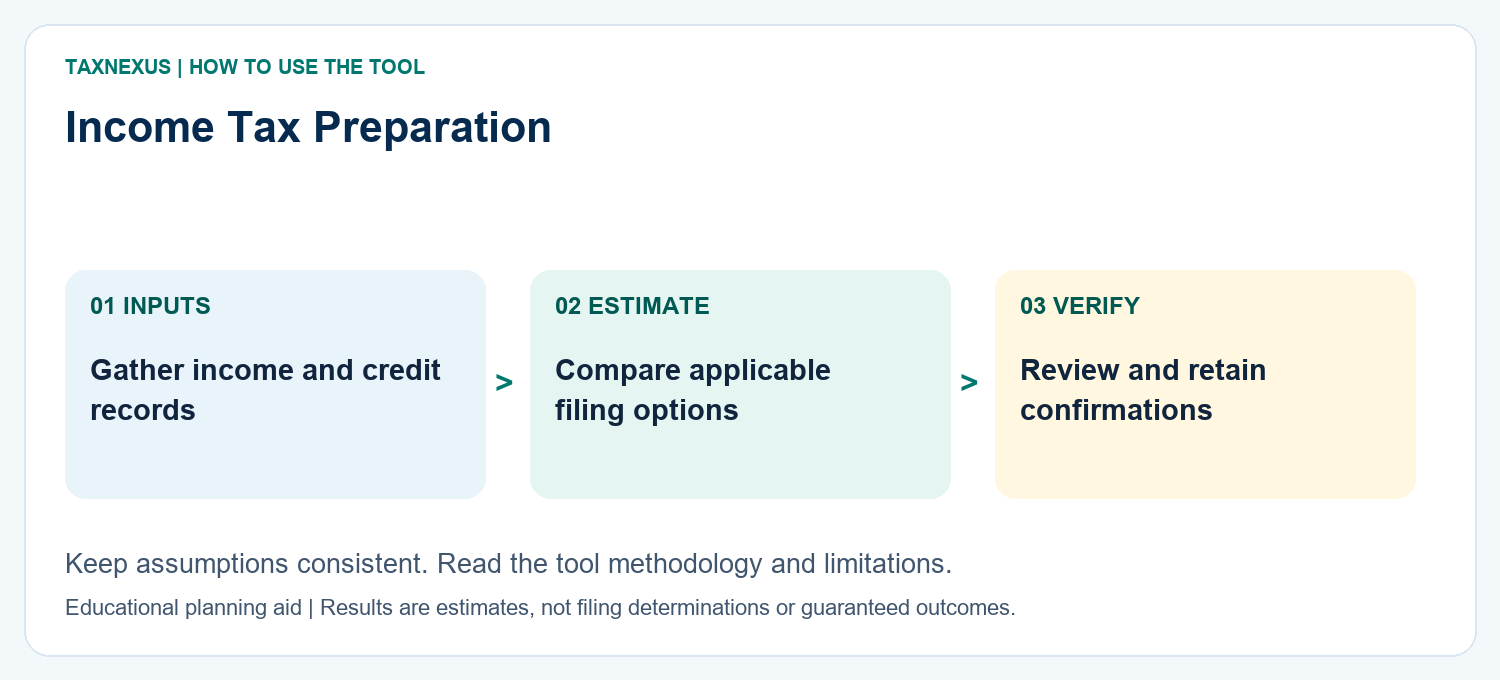
6. ITR filing workflow
- Collect salary, interest, investment and other income records.
- Download and review AIS and Form 26AS.
- Choose the correct tax regime and ITR form.
- Compute taxable income and tax liability, including applicable cess/surcharge where relevant.
- Claim eligible TDS/TCS/advance-tax/self-assessment-tax credits.
- File the return on the official portal and complete verification.
- Save the acknowledgement and monitor processing/refund status.
For a guided walkthrough, use How to File ITR Online – Step by Step.
7. Refunds: reduce avoidable delays
A refund can be delayed when tax credits do not match, the return is not verified, or the nominated bank account has a validation issue. If you expect a refund, check the bank account linked to the income-tax portal before filing.
Helpful guides: Pre-Validate Bank Account for ITR Refund and How to Check ITR Refund Status.
8. TDS and salary-tax tools
TDS is a collection mechanism, not necessarily your final tax liability. If excess tax was deducted, the difference may be refundable after return processing; if too little tax was deducted, additional tax may be payable. For more detail, read TDS in India: Rates, Sections, Examples & Reconciliation and use the TDS Late Fee & Interest Calculator where relevant.
9. Common mistakes to avoid
- Choosing a regime without comparing taxable income under both options.
- Ignoring bank interest, dividends or investment income because it is not in Form 16.
- Claiming TDS that does not appear correctly in the tax records without resolving the mismatch.
- Using the wrong ITR form for capital gains or other non-salary income.
- Missing return verification after filing.
- Using outdated slab rates or deduction rules for the wrong assessment year.
10. Official references
For final filing decisions, verify information on the Income Tax Department e-Filing portal. TaxNexus calculators and guides are designed to simplify planning and reconciliation, but the portal, law, rules, notifications and circulars govern the final tax position.
Income Tax & Deductions Learning Path
Use these guides and calculators together so each topic leads naturally to the next step.