UK Finance & Tax Guides
Practical, source-backed guidance on PAYE, Self Assessment, VAT and limited-company accounting for UK individuals and businesses.
Choose the area you need. Every guide identifies the relevant HMRC or GOV.UK source and separates general education from professional tax advice.
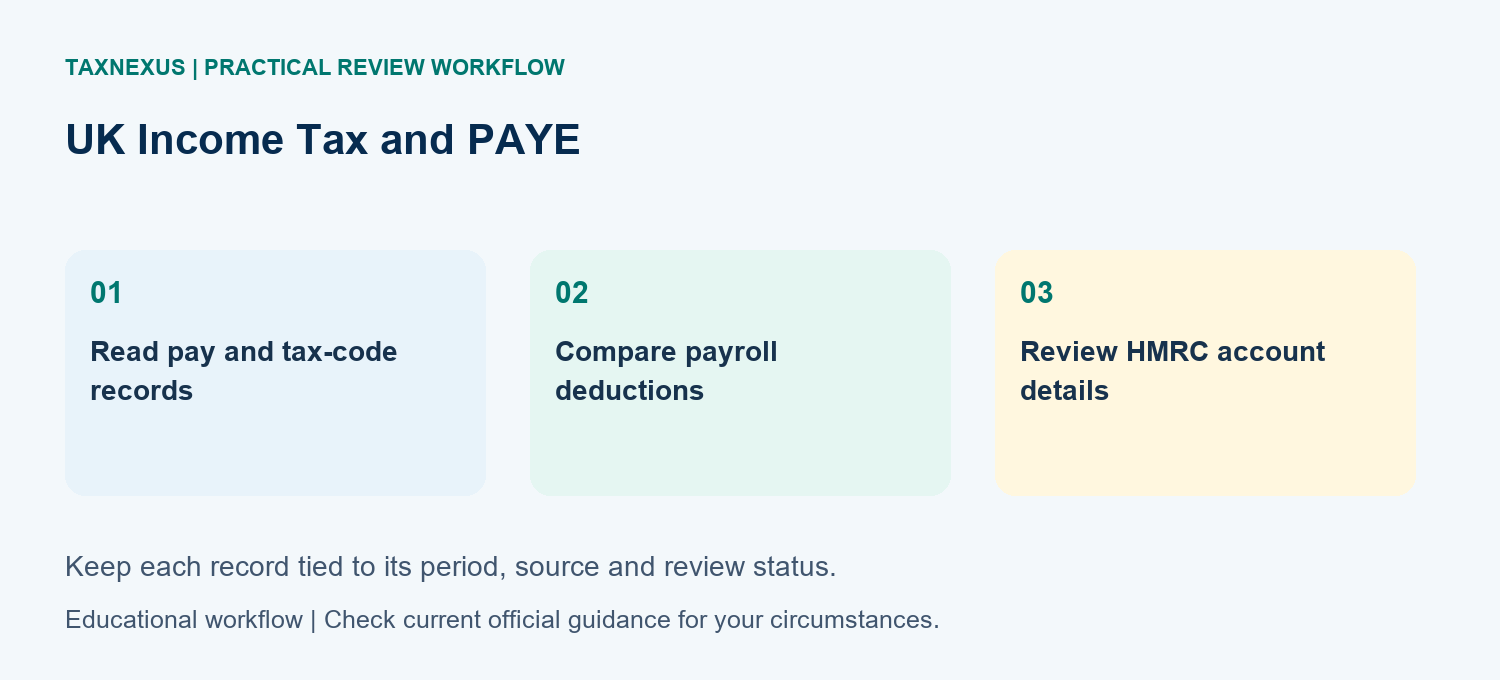
Income Tax & PAYE
Understand how employment income is generally taxed through PAYE and when Self Assessment may also apply.
Read the PAYE guide →Self Assessment
A plain-English checklist covering registration, records, filing steps, payment planning and official HMRC services.
Read the Self Assessment guide →VAT & Recordkeeping
Learn the structure of VAT records, VAT accounts, invoices and digital bookkeeping without mixing them with Indian GST rules.
Read the VAT guide →Limited-Company Accounting
Organise company records, annual accounts, Corporation Tax information and routine finance controls.
Read the company guide →Making Tax Digital
Check the phased income thresholds, quarterly update timetable and practical preparation steps.
Read the MTD guide →Director Salary & Dividends
Compare the main ways to take money from a limited company and the records each route needs.
Read the director guide →PAYE & NI Estimator
Estimate 2026/27 Income Tax, employee National Insurance and take-home pay.
Open the PAYE & NI estimator →Primary sources
GOV.UK Income Tax · GOV.UK Self Assessment · HMRC VAT Recordkeeping
UK tax guides: choose the right workflow
Start with PAYE when the question concerns employment or pension deductions. Use Self Assessment guidance when reviewing a personal return obligation and the records needed for it. VAT and company accounting concern different compliance tasks, so keep their working papers and deadlines separately identifiable.
A person can be involved in more than one workflow. For example, a director’s personal tax records and a company’s accounting records should not be combined into one unexplained bank total. The linked guides help identify the questions to review, while the final treatment depends on the facts and current official requirements.
Check the tax year and scope first
UK tax and accounting periods need to be matched to the particular task. Read the date and scope of a guide or estimator before applying it to a current decision. A calculator’s default salary is an example, not a statement about your tax code or household circumstances.
Keep regional and individual differences visible where relevant. If the estimator excludes a particular adjustment, do not assume the omission means the adjustment does not matter. Check the official instructions or obtain a qualified review for questions outside the displayed assumptions.
Prepare records before entering figures
Gather the relevant statements and identify which period each covers. For payroll, compare the payslip, year-to-date totals and bank credit. For a business, reconcile the books and supporting evidence. For a return, keep income sources and payment records together without counting the same amount twice.
Write down unresolved questions, missing documents and the person responsible for follow-up. A clear exception list is more useful than forcing a total to agree with an unsupported adjustment.
Retain completion evidence
Track preparation, review, submission and payment separately. Save the relevant acknowledgements and explanations when the task is completed. A draft saved in software is not the same as an accepted submission, and a calendar reminder is not a payment receipt.
The UK directory links to independent educational guides and selected tools. It is not an HMRC service and does not submit records or returns to government systems. Use the official references linked above to confirm current requirements before taking the final action.