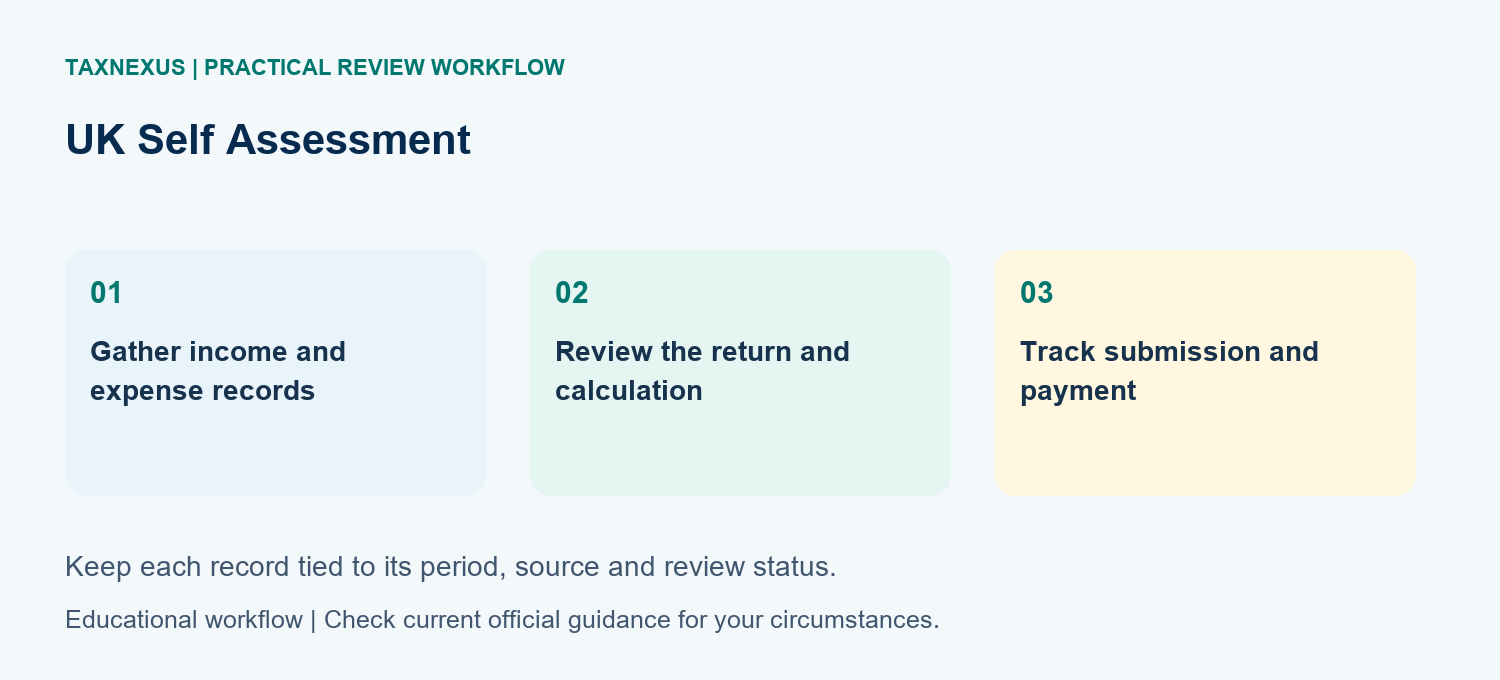
UK Self Assessment Guide
A practical checklist for registration, records, filing and payment through HMRC Self Assessment.
Quick answer
Self Assessment is HMRC’s system for reporting income and gains not fully dealt with through PAYE. Check whether you need a return, register by the applicable deadline, maintain records and file using current HMRC guidance.
Preparation checklist
- Confirm whether a return is required for the tax year.
- Register or reactivate Self Assessment if necessary.
- Collect income, expense, pension, Gift Aid and capital-gains records.
- Reconcile figures before entering them.
- File and pay through an approved HMRC route.
Important dates
Registration, paper-filing, online-filing and payment deadlines are different. Payments on account may also apply. Verify the dates for the relevant tax year directly with HMRC.
After filing
Save the submission receipt and tax calculation, confirm payments have been allocated, and retain the records for the required period. Correct errors promptly using the current amendment process.
Self Assessment: prepare a return file before entering figures
Start with the tax year shown on the return, then build a checklist of income sources that applied during that period. Keep employment documents, self-employment records, interest statements, pension information and other relevant schedules in separate folders. A checklist helps prevent an income stream being missed simply because no reminder arrived.
- Confirm whether you need to send a return using HMRC’s current checker. Having tax deducted from one source does not resolve every other source.
- Check access to your HMRC account in advance. Keep login and identity-verification details private.
- Reconcile the figures to supporting statements. Write down estimates, unresolved differences and the evidence you still need.
- Review the calculation before submitting. Separate the amount relating to the completed year from any payment on account shown for a later period.
- Save a copy of the submitted return, acknowledgement, calculation and payment reference.
Example: employment plus freelance work
An employee also completes several freelance projects. The payslip records employment earnings and PAYE deductions, while the freelance file records customer invoices, receipts and supported business expenses. Combining both into a single unexplained bank total makes review harder. Separate schedules allow the taxpayer or adviser to check the appropriate treatment of each source before completing the return.
After submission
Check that the submission was accepted rather than assuming a saved draft is a filed return. Record the payment deadline separately from the filing task and confirm how payments are allocated in your account. If you discover an error, use HMRC’s current amendment guidance rather than creating a second return without understanding the process. Keep a dated note of the correction and supporting evidence. If your work involves a limited company, review the company accounting guide as well: the company’s return and your personal return serve different purposes.
Self Assessment completion record
Use a separate status for each task: records collected, figures reviewed, return submitted, submission accepted and payment checked. Those stages are related, but completing one does not prove the others are finished. Record a confirmation date and document reference when each relevant stage is completed.
If you use an adviser, agree which items you will provide and which confirmations you expect back. Keep outstanding questions together, including the source document and amount affected. This helps both people distinguish a missing record from a question about treatment. Save the final answers with the return working papers so next year’s review can follow the reasoning rather than relying on memory.