Insurance in India: Life, Health, Motor & Policyholder Guide
Understand protection needs, policy terms, exclusions, claims, renewals and policyholder rights before buying or renewing insurance.
Editorial standards: About TaxNexus · Editorial Policy · Disclaimer
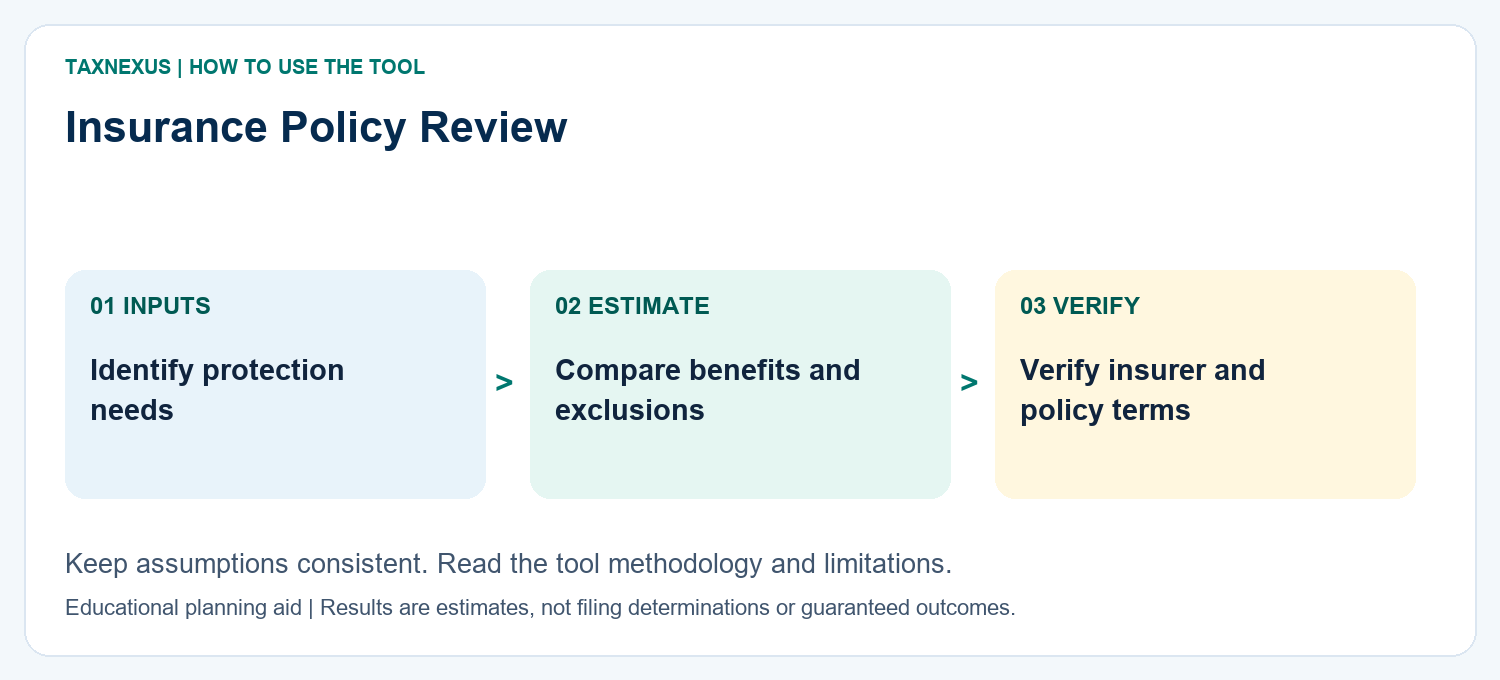
Insurance is primarily a risk-transfer tool. Before comparing premium, define the risk you want to protect against and the financial impact if that event occurs. Then compare coverage, exclusions, waiting conditions, deductibles, claim process, renewal terms and insurer service.
Life and term insurance planning
Health insurance and hospitalisation cover
Motor third-party and own-damage cover
1. Life insurance: protection first
Life insurance can provide a financial benefit to nominees or beneficiaries on the insured person’s death, subject to policy terms. Products can combine protection with savings or investment features, but the purpose and cost structure can differ significantly.
For income-replacement needs, compare the required cover with outstanding loans, dependants’ living costs, education goals and existing assets. Read the benefit illustration and product terms before purchasing.
2. Free-look period
IRDAI’s life-insurance product master circular provides a 30-day free-look period from receipt of the policy document for the policyholder to review terms and cancel if not satisfied, subject to the applicable rules and permitted deductions.
3. Health insurance
Health insurance can cover eligible hospitalisation and other medical costs subject to the chosen product. Compare the sum insured, room-rent conditions, co-pay, deductible, network hospitals, exclusions, waiting conditions, sub-limits, restoration benefits and claim procedure.
IRDAI maintains a Master Circular on Health Insurance Business and policyholder-protection regulations governing insurers and health products.
Do not hide existing medical conditions or other material information on the proposal form. Incomplete or inaccurate disclosure can complicate underwriting and claims.
4. Family floater vs individual health cover
A family floater shares one sum insured among covered members, while individual plans allocate separate cover. The better structure depends on ages, health history, number of dependants, expected utilisation and available budget. Compare the effective cover available if more than one family member needs treatment in the same year.
5. Motor insurance
IRDAI states that third-party liability insurance is mandatory for vehicles plying on public roads in India. Own-damage protection is separate and can be provided through package/comprehensive, bundled or standalone own-damage structures as applicable.
When comparing motor policies, review Insured Declared Value, deductibles, own-damage cover, add-ons, exclusions, cashless network and claim process—not only premium.
6. Proposal form and disclosure
The proposal form is part of the insurance contract. Answer health, occupation, lifestyle, past-policy and claims questions accurately. If an intermediary fills the form, review it before signing or confirming digitally.
Keep copies of the proposal, policy schedule, premium receipt, medical reports, endorsements and correspondence.
7. Nomination and policy records
- Keep nominee details current.
- Tell a trusted family member where policy records are stored.
- Keep insurer contact information and policy numbers accessible.
- Update address, phone, email and bank details when they change.
- Review coverage after marriage, children, a large loan or a major change in income.
8. How to compare policies
| Area | What to compare |
|---|---|
| Coverage | What events and expenses are covered? |
| Exclusions | What is specifically not covered? |
| Limits | Sum insured, sub-limits, deductible and co-pay |
| Continuity | Renewal conditions and portability/migration provisions where applicable |
| Claims | Cashless/reimbursement process, documentation and service channels |
| Price | Premium today and the possibility of future revision |
9. Claims: prepare before you need one
Understand the claim notification process and document requirements before an emergency. For health insurance, know the network-hospital and reimbursement process. For motor insurance, IRDAI’s guidance lists common claim documents such as claim form, registration details, repair estimate/invoice and other documents depending on the event.
10. Grievance redressal
If a complaint is not resolved satisfactorily by the insurer, policyholders can use the IRDAI grievance mechanism. IRDAI’s Bima Bharosa portal provides a channel to register and track complaints against insurers and intermediaries.
11. Common insurance mistakes
- Buying only on premium without reading exclusions and limits.
- Mixing investment and protection objectives without understanding costs.
- Insuring for too little relative to dependants or healthcare risk.
- Not disclosing material health or lifestyle information.
- Letting policies lapse because renewal reminders or payment details changed.
- Not updating nominees after major life events.
- Waiting until claim time to understand documentation requirements.
12. Official references
Use the Insurance Regulatory and Development Authority of India for policyholder guidance, insurer lists, regulations and circulars. For complaints, use Bima Bharosa.