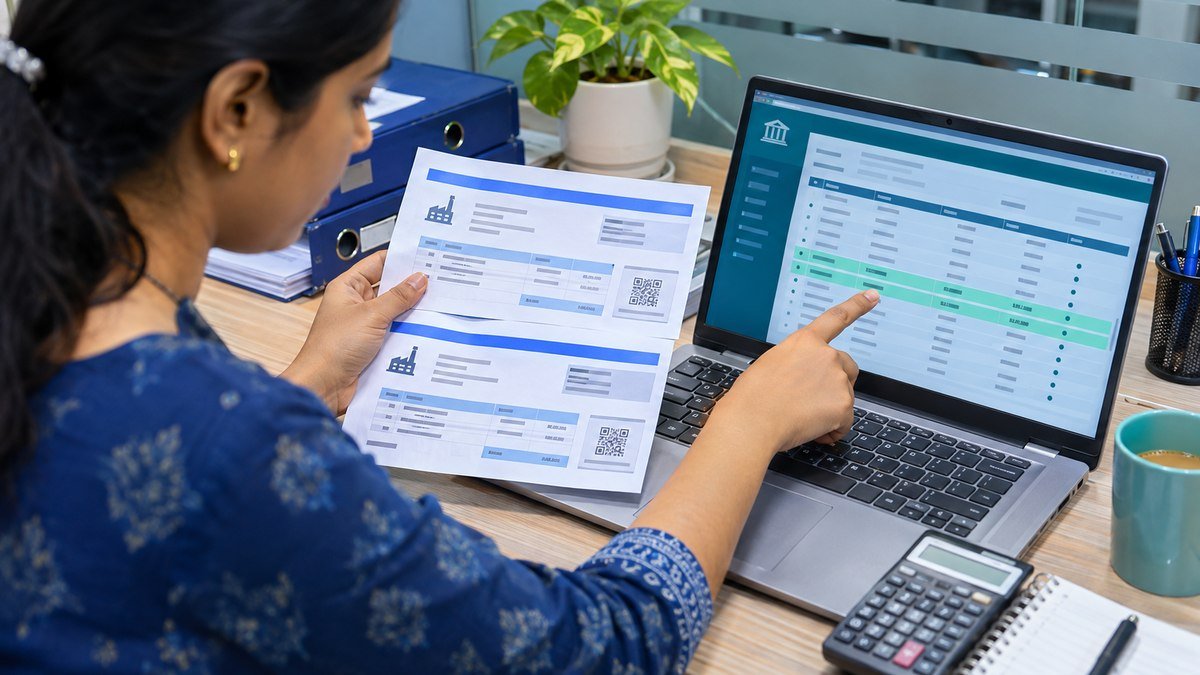
Duplicate supplier payments happen when a business pays the same obligation twice. The quickest place to stop one is the proposed payment run. Compare each suspect line with the original invoice, earlier payment batches and the bank record. If both transfers have settled, keep the second payment traceable while you agree a refund or a documented credit with the supplier.
1. Check for duplicate supplier payments before releasing the batch
Export the proposed payment run and compare it with open invoices, recent payments and batches already sent to the bank. Start with the supplier, invoice reference, currency and amount. Search for variants such as INV-872, INV872 and inv-872 while keeping the original references for review. Include alternate supplier codes when you have confirmed they represent the same legal supplier. Matching only the amount can flag unrelated recurring bills or instalments.
Check whether the earlier batch is approved, sent, settled, rejected or reversed. A transfer can be missing from the AP posting report while it is still pending with the bank. Keep the new line on hold until Treasury confirms the earlier payment’s status. If someone asks to reissue a payment, retain the rejection or reversal reference and link it to the new instruction so the reviewer can see what changed. Oracle’s Payables documentation describes reviewing duplicate invoices and using a payment hold during investigation. Oracle Payables guidance on identifying duplicate invoices.
2. Worked example with one invoice and two payment requests
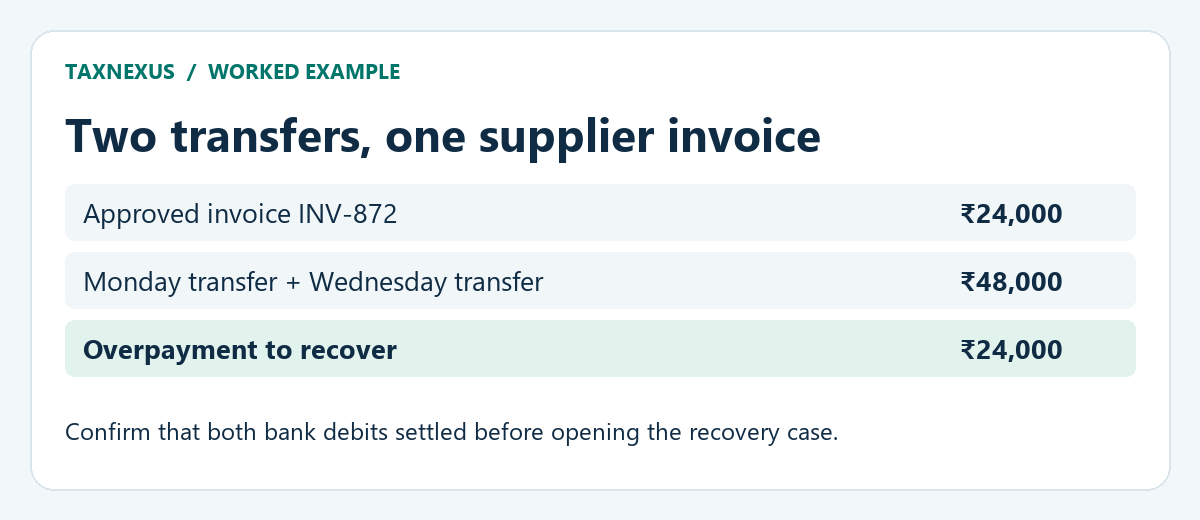
A fictional hotel has an approved ₹24,000 invoice for completed maintenance. AP schedules INV-872 in Monday’s bank batch. The supplier later emails a copy of the same invoice and a second entry appears as INV872 in Wednesday’s proposed run. The reviewer sees the same supplier, amount, currency, invoice date and service order, then checks the bank status of Monday’s transfer.
| What the reviewer finds | What to do | Evidence to retain |
|---|---|---|
| Monday settled. Wednesday is proposed. | Hold Wednesday’s line and verify the second invoice entry before correcting it. | Original invoice, service order, bank confirmation and hold approval. |
| Monday rejected. Wednesday is proposed. | Confirm the rejection and approve a single replacement payment through the normal process. | Bank rejection, updated batch reference and approval. |
| Both transfers settled. | Trace ₹48,000 in bank debits against the ₹24,000 obligation. Begin recovery of ₹24,000. | Both transfer references, bank debits and supplier acknowledgement. |
In the first scenario, removing the second line prevents another ₹24,000 leaving the bank. In the last scenario, the total paid is ₹48,000 and the overpayment is ₹24,000. If the invoice was posted twice as well, reconcile the invoice entries and correct the duplicate through the approved process. That correction addresses the accounting record. Treasury still needs to recover or formally apply the cash overpayment.
3. Recover duplicate supplier payments and match the evidence
Ask Treasury to verify both settled debits and check for a pending reversal. Contact the supplier through an established channel with the invoice number, both remittance references, dates and the amount owed back. Ask the supplier to confirm which payment it received and how it proposes to return or apply the extra amount. Keep the response with the case record and follow your normal bank-detail verification process if payment instructions change.
For a refund, match the credit on the bank statement to the supplier and original overpayment. For an agreed credit, record the supplier’s written confirmation and apply the amount to an eligible invoice using the approved workflow. If the amount received differs from the expected recovery because of a fee, exchange difference or partial refund, record the reason and leave any unresolved balance open. Re-run the open-item report after posting so the clearance can be traced to the original item. The Vendor Debit Balances guide shows how to carry this item through month-end with an owner and follow-up date.
4. Put the duplicate check where it can stop the payment
To prevent duplicate supplier payments, check for duplicates at invoice entry and again before releasing the payment batch. At entry, flag same-supplier invoices with a matching reference or unusually similar date and amount. Before release, compare the proposed payments with pending and recently settled batches. An independent reviewer should resolve flagged items against the source documents before approving an exception. Keep the review trail so someone can see why a matching item was a genuine second invoice, an instalment or an error.
Control how payment files are reissued. Assign a unique batch reference, keep the bank acknowledgement and verify the first file’s status before resubmitting. When onboarding or changing a supplier record, look for existing records with the same verified details. Assign one owner for each suspected duplicate and track the amount, status, next action and deadline. See Accounts Payable Process for the wider approval workflow and Supplier Statement Reconciliation for matching supplier-side records.
5. Close the case when the balance is supported
For confirmed duplicate supplier payments, give the case one reference and use it on the recovery correspondence, cash receipt and AP adjustment. If only part of the ₹24,000 comes back, record the partial refund, reduce the outstanding recovery by the amount matched and set a new follow-up date for the balance.
A complete case record gives the supplier and invoice, both payment references, evidence of the valid obligation, the overpaid amount, the recovery route, the approval and the final clearing reference. If recovery is still pending at month-end, keep the amount on the open-items list and record the next follow-up. Review closed cases for recurring causes such as alternate invoice number formats, overlapping manual and automated batches, or a reissue made before the first transfer returned. Use the pattern to adjust the control that missed the duplicate.
Can two payments for the same amount be valid?
A same-amount match is a useful flag for duplicate supplier payments. Compare the payment status as well as the supplier records. Compare the original invoice, purchase order or service period, supplier identity, payment terms and bank references. Two valid invoices can have the same amount. One invoice can also have two valid instalments, so confirm the total obligation before placing or releasing a hold.