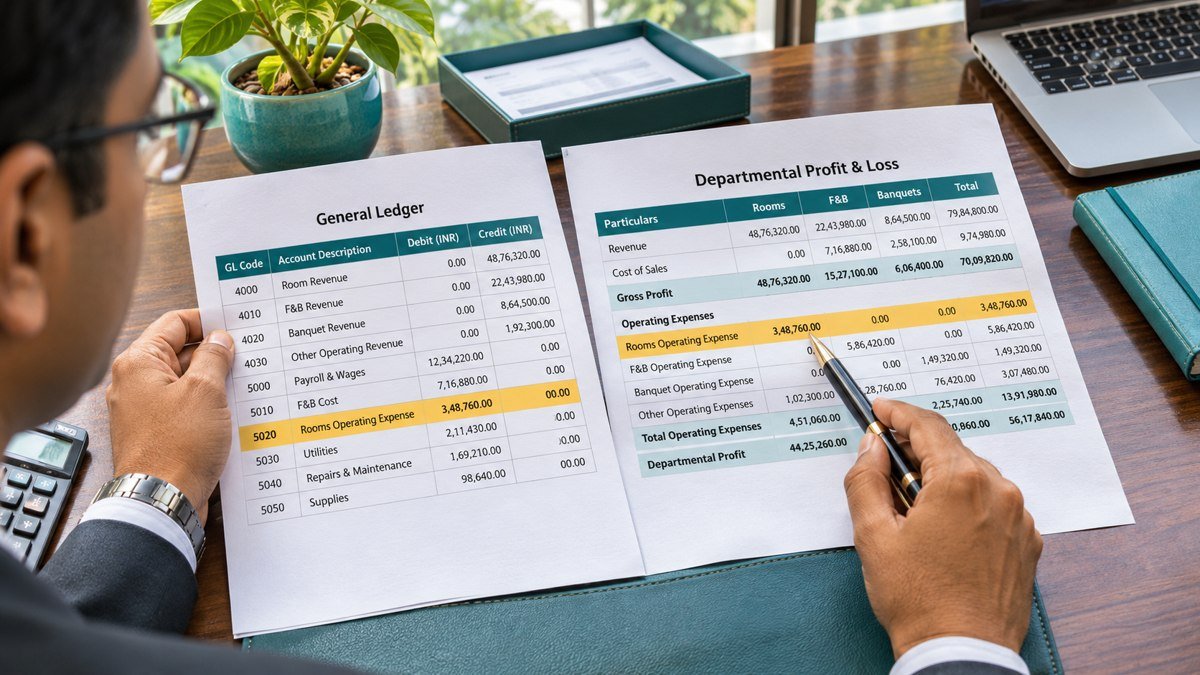
Hotel labour forecasting turns the approved roster into a cost estimate. When actual payroll arrives, the same schedule shows whether the difference came from more shifts, higher pay rates, overtime or a different mix of employees and agency staff.
This fictional one-month example covers selected hourly costs for housekeeping and front office. The example uses agreed hourly planning rates and excludes employer contributions, benefits, fixed salaries and other departments. Include those costs separately when preparing a full-property forecast. The overtime and agency rates are illustrative inputs.
1. Build the hotel labour forecast from the roster
Start with the days and shifts the hotel needs to cover. For housekeeping, review occupied rooms, expected checkouts and the mix of stayover and departure cleans. For front office, check arrival and departure peaks and the minimum coverage required on each shift. Review group bookings and events by date. A monthly occupancy average can conceal several busy days that need extra staff.
List each shift by work date, department, role and pay type. Convert shift length into paid hours using the relevant break and pay rules. Assign each hour to one pay category. In the worked example, overtime hours are outside regular hours and are costed at the full illustrative overtime rate. If your schedule already includes those hours at base pay, add only the incremental overtime premium to that schedule.
2. Price regular hours, overtime and agency shifts
Multiply hours by the applicable rate for each line. Review approved pay changes, joiners, leavers and transfers against the dates they affect. If a pay rate changes partway through the month, split the hours across the two rates. Assign agency coverage to the department receiving the service and use the applicable bill rate, which may differ by shift or day.
Use the roster as the source of planned hours and approved time records as the source of actual employee hours. For agency shifts, match the approved timesheet to the invoice or month-end accrual. Record the rate source alongside the hours so someone reviewing the forecast can reproduce the calculation.
3. Compare the forecast with actual labour cost
The hotel labour forecasting example below holds hourly rates constant to isolate changes in hours. The variance equals actual cost minus forecast cost. A positive variance means actual cost exceeded forecast.
| Cost line | Forecast hours × rate | Actual hours × rate | Forecast cost | Actual cost | Variance |
|---|---|---|---|---|---|
| Housekeeping regular | 1200 × ₹250 | 1220 × ₹250 | ₹3,00,000 | ₹3,05,000 | +₹5,000 |
| Front office regular | 800 × ₹300 | 790 × ₹300 | ₹2,40,000 | ₹2,37,000 | −₹3,000 |
| Housekeeping overtime | 60 × ₹375 | 80 × ₹375 | ₹22,500 | ₹30,000 | +₹7,500 |
| Agency coverage | 40 × ₹450 | 32 × ₹450 | ₹18,000 | ₹14,400 | −₹3,600 |
| Total | 2,100 hours | 2,122 hours | ₹5,80,500 | ₹5,86,400 | +₹5,900 |
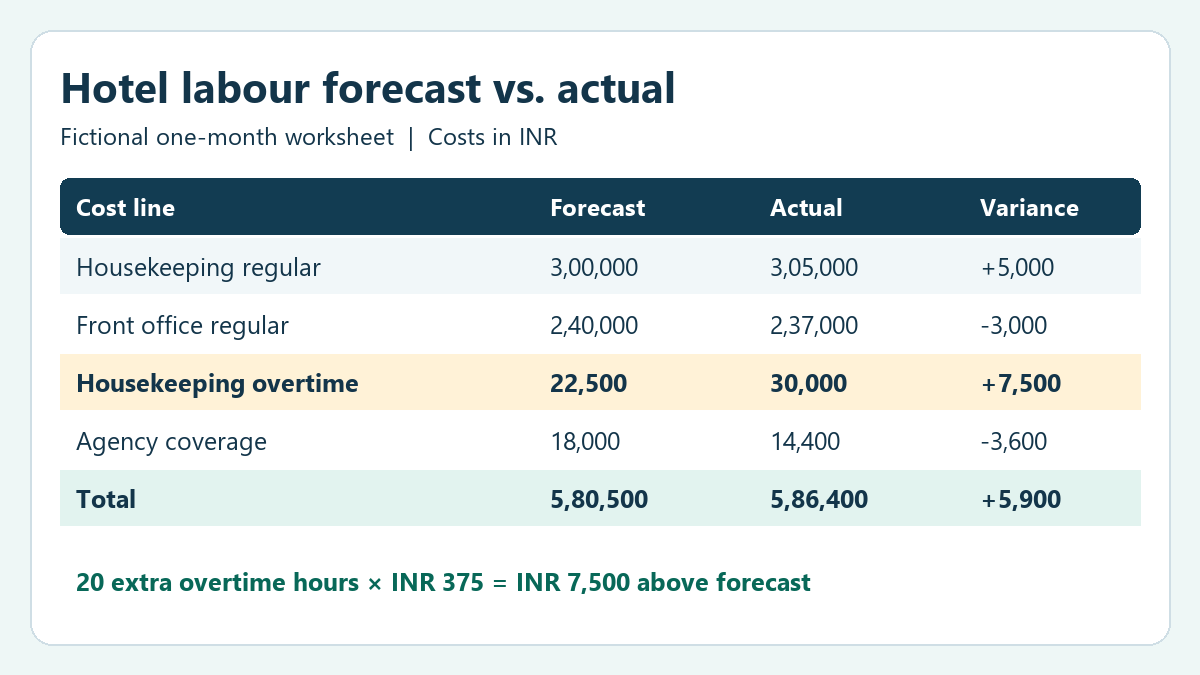
Housekeeping regular hours were ₹5,000 over forecast and overtime was ₹7,500 over. Front office regular hours cost ₹3,000 less and agency coverage cost ₹3,600 less. Together, the four changes account for the ₹5,900 overrun. The overall total can look modest while overtime still needs a closer review.
Ask the supervisor which dates drove the 20 extra overtime hours. Check whether the hours covered higher checkout volume, absence or an uncovered shift. Check the agency timesheets separately before concluding that the reduction in agency hours caused the increase in overtime. Record the evidence and agree who will update the next roster.
4. Separate changes in hours and rates
When both hours and rates change, multiply the change in hours by the forecast rate to get the hours variance. Then multiply the change in rate by the actual hours to get the rate variance. The two figures add up to the total cost variance for that line.
For example, if the 80 actual overtime hours had cost ₹390 an hour, the hours variance would still be ₹7,500. The rate variance would add ₹1,200, calculated as 80 × ₹15. The resulting overtime cost would be ₹31,200 against a ₹22,500 forecast, a difference of ₹8,700. This sensitivity is separate from the main table, which holds rates constant.
5. Update the rolling hotel labour forecast
Keep the approved budget and the previous forecast as comparison points. Replace elapsed periods with reconciled payroll expense and agency charges, then cost the remaining shifts from the latest roster. Include an approved accrual for work already performed if it is absent from recorded actuals. When the invoice arrives, reconcile it to the accrual before adding any new cost.
Review regular hours, overtime and agency hours together at the weekly hotel labour forecasting meeting. Keep the cost lines separate so department managers can explain how they staffed the month. For each material change, record the dates, the hours, the rate, the reason and the owner. Ask the department to confirm any estimate that depends on an unfilled vacancy or an event booking.
At month-end, reconcile the employee payroll cost to the payroll register and general ledger. Check agency invoices and accruals against approved hours and use the same reporting scope in forecast and actuals. If the roster and ledger use different department names, confirm the mapping before comparing them.
What to include in the monthly variance note
Start with the total difference and identify the largest movement by department. In this hotel labour forecasting example, housekeeping overtime added ₹7,500, and the two largest offsets came from lower agency and front office hours. State which movements are supported by approved time records and which still need confirmation.
Include a decision for the next roster. If the same checkout pattern is expected again, ask housekeeping to revise its coverage estimate for those dates and compare the cost with the available staffing options. If the increase came from a one-off absence, record the reason in the month-end review and check whether normal coverage has resumed.
Keep the roster version, payroll totals and agency evidence with the hotel labour forecasting schedule. The next reviewer can then trace the explanation back to the underlying hours and check whether the changes were reflected in the following forecast.
Oracle’s workforce planning documentation describes the working-hours assumptions used for hourly salary costs. Its video library shows the workflow in Cloud EPM. Oracle Workforce assumptions · Oracle Cloud EPM planning videos
Connect the hotel labour forecasting schedule to the rooms and restaurant forecasts when reviewing the full month. Hotel Budgeting and Forecasting
Check payroll inputs, expense postings and payment balances before signing off on actuals. Payroll Reconciliation: Complete Process, Checklist & Journal Entries