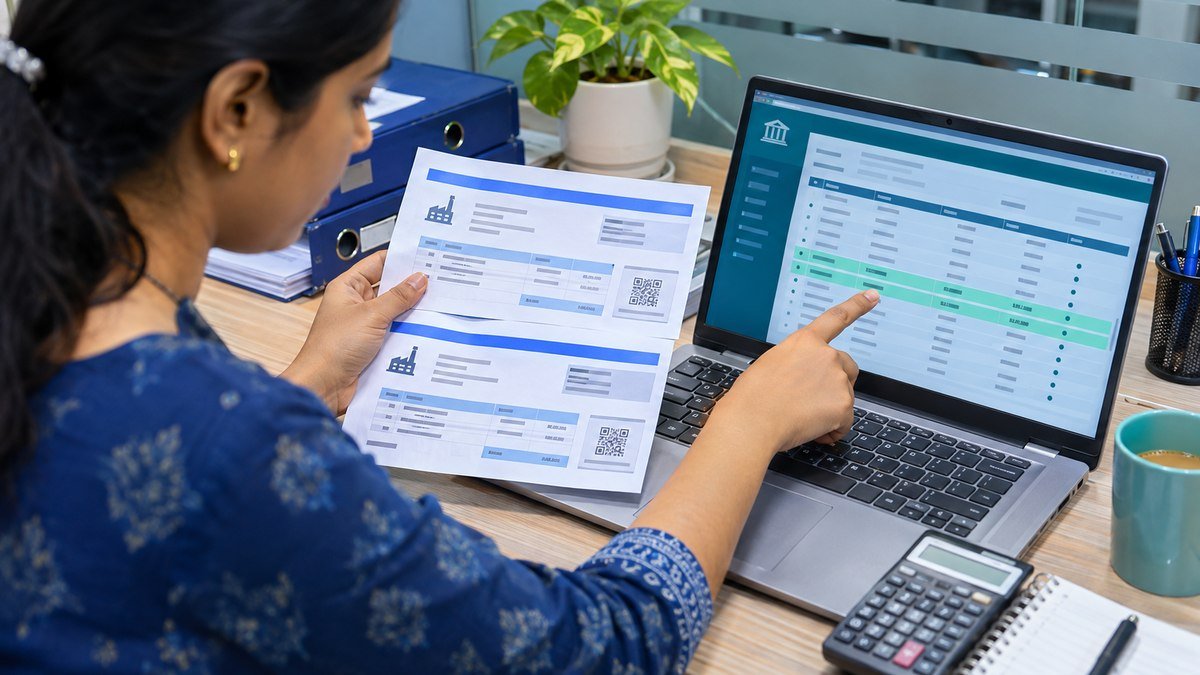
TDS late fee and interest review starts by separating statement filing, deduction and deposit delays. Use this calculator to organise the relevant amounts and dates, then compare the estimate with the official compliance position for the selected period.
TDS Late Fee + Interest Calculator
Calculate late-filing fee, late-deduction interest and late-deposit interest in one place.
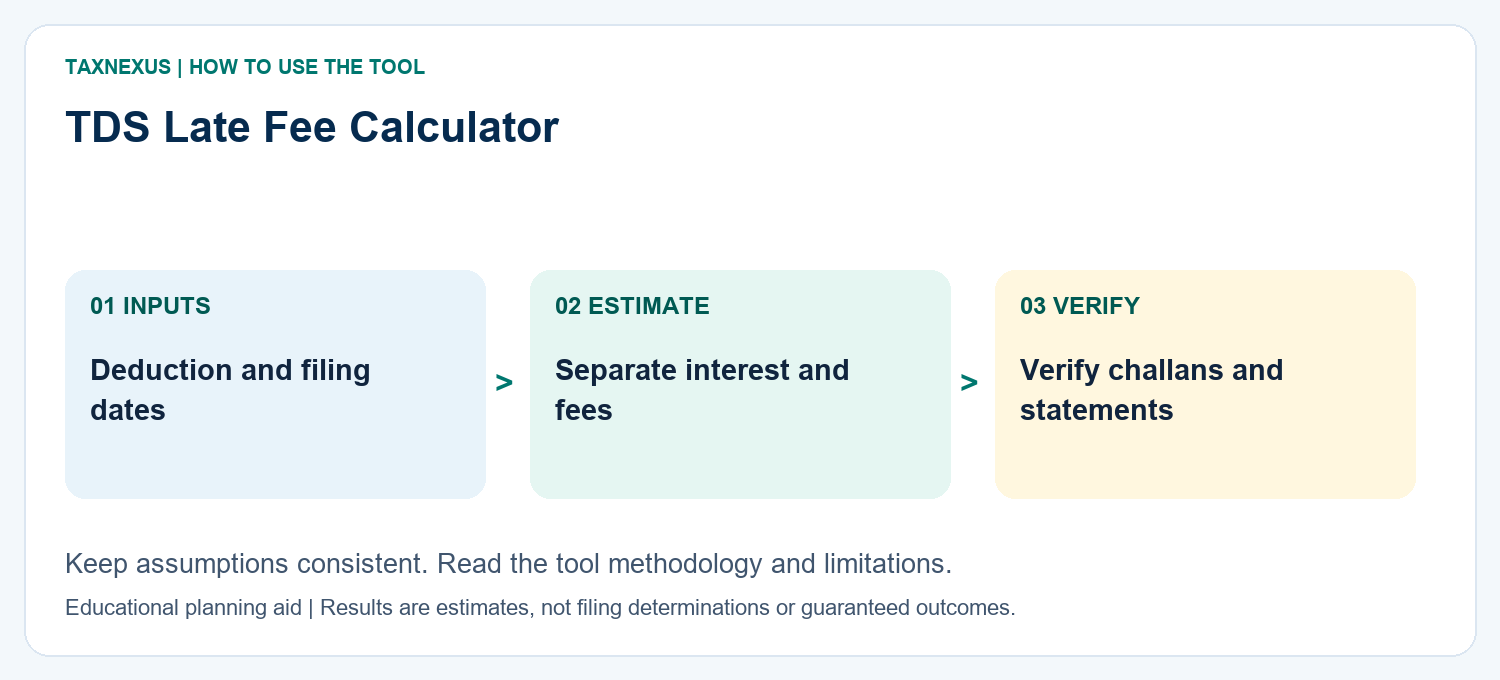
Estimate TDS late fee and interest in a few steps. Select the delay type, enter the amount and relevant dates.
Statement filing dates
Deduction dates
Deposit dates
Total estimated amount
₹0Select the delay type and enter the applicable dates.
Your information is calculated only in your browser and is not saved.
How is the calculation made?
Late filing: ₹200 per day, subject to the selected period cap.
Late deduction: 1% per month or part of a month.
Late deposit: 1.5% per month or part of a month.
Important limitations
Due dates differ by form, quarter and deductor. Transitional provisions, correction statements, penalties, relief and prosecution are not calculated. Verify the final demand through TRACES or the Income Tax portal.
Official references
Income Tax Department — TDS Compliance
Late filing of TDS/TCS statements
Disclaimer: This is an educational estimate. Confirm the final amount on official portals or with a qualified tax professional.
Related Calculators
Check GST filing delays with the GST Late Fee & Interest Calculator, compare income-tax regimes with the Tax Regime Calculator, or browse all Finance Calculators.
TDS late fee review: 3 essential date checks
- Statement filing dates. Check the due date for the particular form, quarter and deductor, including any applicable extension. Use the actual accepted filing date rather than a draft preparation date. A statement-upload attempt may need follow-up if it was rejected.
- Deduction dates. Keep the date tax was deductible separate from the date it was actually deducted. The calculation depends on identifying the relevant event correctly. A payment date alone does not establish when deduction was required.
- Deposit dates. Match the deduction record to the actual deposit evidence. Check the tax period, challan details and amount rather than assuming that any payment of the same value settles the same liability.
Separate TDS late fee and interest results
The filing-fee output and the two interest outputs address different delays. Selecting only one delay type can help review that component; selecting all applicable delays does not remove the need to confirm that each component genuinely applies.
The compliance-period selector is important because the tool includes different period assumptions. Check the underlying rules for the relevant date and transaction. Do not use a current-period result to describe an earlier liability without reviewing the transitional position.
Prepare a traceable working paper
Use one line for each deduction or clearly defined group of transactions. Record the amount, date tax became deductible, actual deduction, deposit evidence and statement reference. If several deductions were deposited together, keep a schedule showing how the challan total is allocated.
Save the selected inputs alongside the result. Distinguish an estimated amount from a portal demand and keep the reason for any difference. Corrections, relief and taxpayer-specific facts can require review beyond a date-based calculator.
What this estimate does not decide
This TDS late fee illustration does not determine whether a payment required deduction, choose the correct section, settle a disputed demand or calculate every possible consequence. Check current official guidance through the references above and reconcile the working with TRACES or the Income Tax portal before relying on it.
For the wider recordkeeping process, use the TDS compliance guide. Keep personal and deductee information private; only numerical planning inputs are needed for the calculator.
Ask TaxNexus
Send your question and the TaxNexus team can review what you are trying to calculate. The calculator page is included automatically.
Safety: Do not send passwords, OTPs, card numbers, bank login details or other confidential credentials.