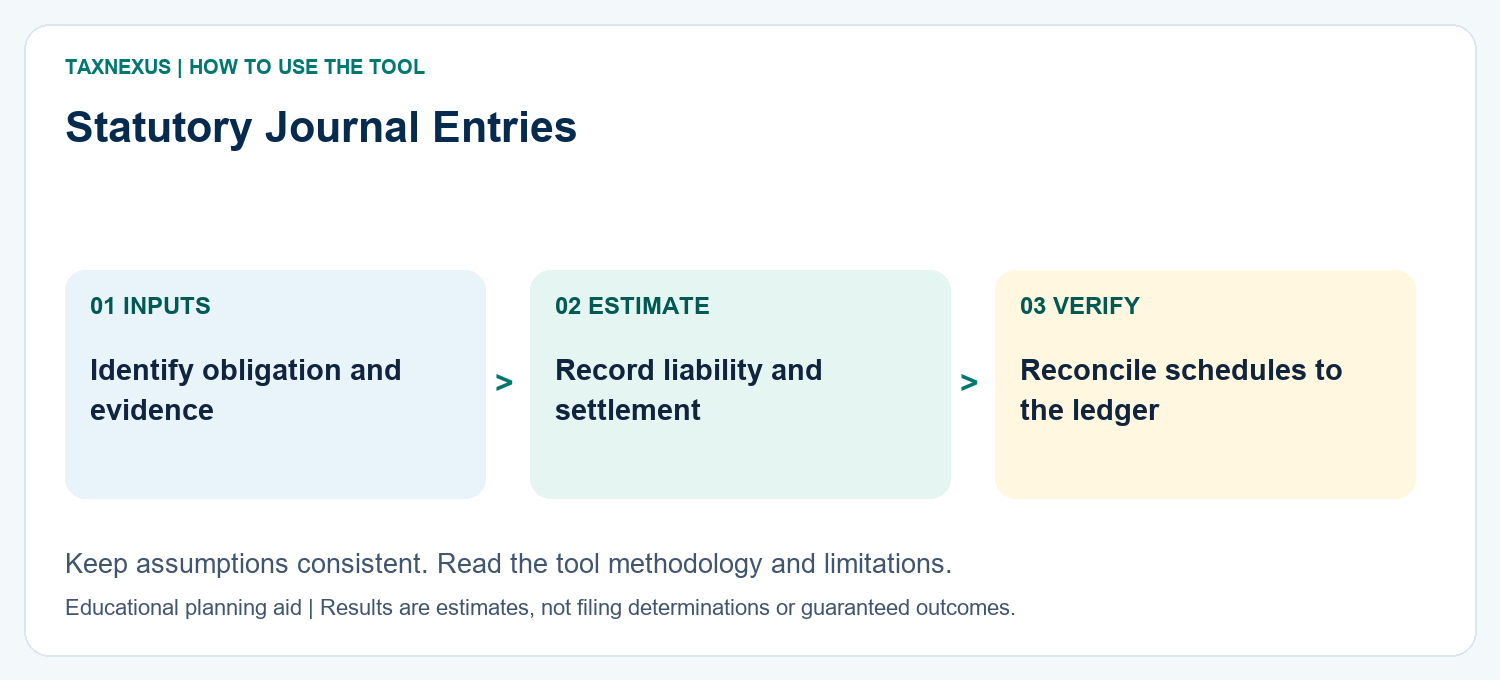
ALL IMPORTANT STATUTORY JOURNAL ENTRIES – GST, TDS, TCS, EPF, ESI, EPS
1. GST (Goods and Services Tax)
a) On Purchase of Goods with GST
Purchase A/c Dr
Input CGST A/c Dr
Input SGST A/c Dr
To Vendor A/c
b) On Sale of Goods with GST
Debtor A/c Dr
To Sales A/c
To Output CGST A/c
To Output SGST A/c
c) GST Paid to Government
Output CGST A/c Dr
Output SGST A/c Dr
To Input CGST A/c
To Input SGST A/c
(Balance payable transferred to GST Payable A/c)
GST Payable A/c Dr
To Bank A/c
2. TDS (Tax Deducted at Source)
a) On Expenses where TDS is applicable
Expense A/c Dr
To TDS Payable A/c
To Creditor A/c
b) On Payment to Creditor
Creditor A/c Dr
To Bank A/c
c) On TDS Payment to Government
TDS Payable A/c Dr
To Bank A/c
3. TCS (Tax Collected at Source)
a) On Sale where TCS is applicable
Debtor A/c Dr
To Sales A/c
To TCS Payable A/c
b) On Payment of TCS to Government
TCS Payable A/c Dr
To Bank A/c
4. EPF: separate employee deductions and employer cost
At payroll booking, debit Gross Salary Expense and credit Employee EPF Payable, other employee-deduction liabilities and Net Salary Payable for the corresponding amounts. The credits must equal gross salary.
Record the employer’s contribution separately: debit Employer PF/Pension Expense and credit Employer EPF Payable and EPS Payable for the applicable allocation. Do not count the employer cost as another deduction from the employee’s gross salary.
On net-salary payment: debit Net Salary Payable and credit Bank. On remittance to EPFO: debit the relevant employee EPF, employer EPF and EPS liabilities and credit Bank. The liability schedule should explain the amount remitted.
5. ESI: keep employer expense separate
Record an employee ESI deduction as a credit to Employee ESI Payable within gross-to-net payroll booking. Record the employer contribution separately by debiting Employer ESI Expense and crediting Employer ESI Payable.
On remittance, debit the employee and employer ESI liabilities for the amounts settled and credit Bank. Reconcile both liabilities with payroll and payment evidence.
6. EPS: avoid duplicate recognition
Where applicable, the EPS allocation is part of the employer contribution already recorded above. Credit EPS Payable when recognising that employer cost, then debit EPS Payable when it is remitted. Do not book the same EPS expense again simply because it is shown in a separate schedule.
These are illustrative accounting structures. Determine coverage, wages, rates and allocation from current official requirements and the employee’s circumstances. See EPFO’s official guidance.
Statutory Journal Entries: practical TDS example
Assume a professional service expense of ₹1,00,000 where TDS of ₹10,000 is applicable for this illustrative example. The entry can be recorded as: Dr Professional Fees ₹1,00,000; Cr Vendor ₹90,000; Cr TDS Payable ₹10,000. When TDS is deposited: Dr TDS Payable ₹10,000; Cr Bank ₹10,000.
Similarly, if a purchase invoice is ₹1,00,000 plus illustrative GST of ₹18,000, the accounting should separately capture the purchase/expense, eligible input GST and vendor liability. The exact GST, TDS, PF and ESI treatment depends on the transaction facts, current law and your chart of accounts.
For TDS working and old-vs-new section mapping, see our TDS guide and reconciliation template. For salary-related statutory control checks, see the Payroll Reconciliation guide.
You can also download our ready-to-use Statutory Journal Entries Excel template covering GST, TDS, TCS, EPF, EPS, ESI and a month-end statutory checklist.
Tips for Accuracy
Always check threshold limits (e.g., TDS applicability).
Employer contributions are company expenses.
EPS doesn’t have an individual employee account – it goes to Govt pension pool.
GST entries differ slightly for IGST (interstate transactions).
Statutory journal entries: reconciliation checks
Keep a working paper for each obligation showing the opening liability, amount recognised, payments, adjustments and closing balance. Match the payment to the correct period and liability. A cleared bank transaction does not explain whether an earlier payable was recorded correctly.
Review the journal totals before posting and retain approval evidence. Separate an accounting correction from a change in the statutory calculation; both may require investigation, but they answer different questions. Never use an unsupported balancing entry simply to make the schedule agree.
For example, an opening payable of ₹10,000 plus ₹25,000 recognised during the month less ₹20,000 paid leaves ₹15,000 outstanding before other adjustments. Match each component to evidence. The schedule explains the liability movement; it does not establish the rate or legal applicability of the underlying deduction.
Balanced payroll journal entries: numerical illustration
Assume gross salary is ₹1,00,000, employee PF deduction is ₹10,000 and net salary is ₹90,000, with no other deductions in this illustration. Book gross salary by debiting Salary Expense ₹1,00,000, crediting Employee PF Payable ₹10,000 and crediting Net Salary Payable ₹90,000. The entry balances without including the employer contribution.
Separately assume employer PF/pension cost is ₹12,000. Debit Employer PF/Pension Expense ₹12,000 and credit the relevant employer EPF/EPS liabilities for a total of ₹12,000. The allocation must follow the applicable rules; the numbers here illustrate accounting structure rather than statutory rates.
Paying employees clears Net Salary Payable ₹90,000 against Bank. Remitting the combined ₹22,000 clears Employee PF Payable ₹10,000 and the employer liabilities totalling ₹12,000 against Bank. In this simplified example, total payroll-related expense is ₹1,12,000 and total cash paid is ₹1,12,000.
What this example helps detect
If employer contribution is included as another employee deduction, net salary can be understated. If the same employer cost is booked once in payroll and again when paid, expense can be duplicated. If only the bank payment is recorded, the liability trail can disappear.
Reconcile the payroll register, expense accounts, liability schedule and bank evidence separately. Use the dates and references to distinguish a current-period expense from payment of an opening payable. A journal description should make that distinction understandable to the next reviewer.
For GST settlement, the journal must reflect the eligible credit actually utilised and the residual cash liability. The brief set-off illustration above does not authorise unrestricted cross-utilisation between tax heads. Reconcile the ledger to the applicable return and portal payment records, and obtain tax-team review for uncertain treatment.