US Finance & Tax Guides
Clear, source-backed explanations of federal income tax, withholding, estimated payments and small-business bookkeeping for individuals and business owners.
Start with the guide that matches your situation. TaxNexus explains the process in plain English and links to the relevant IRS material so you can confirm current requirements before acting.
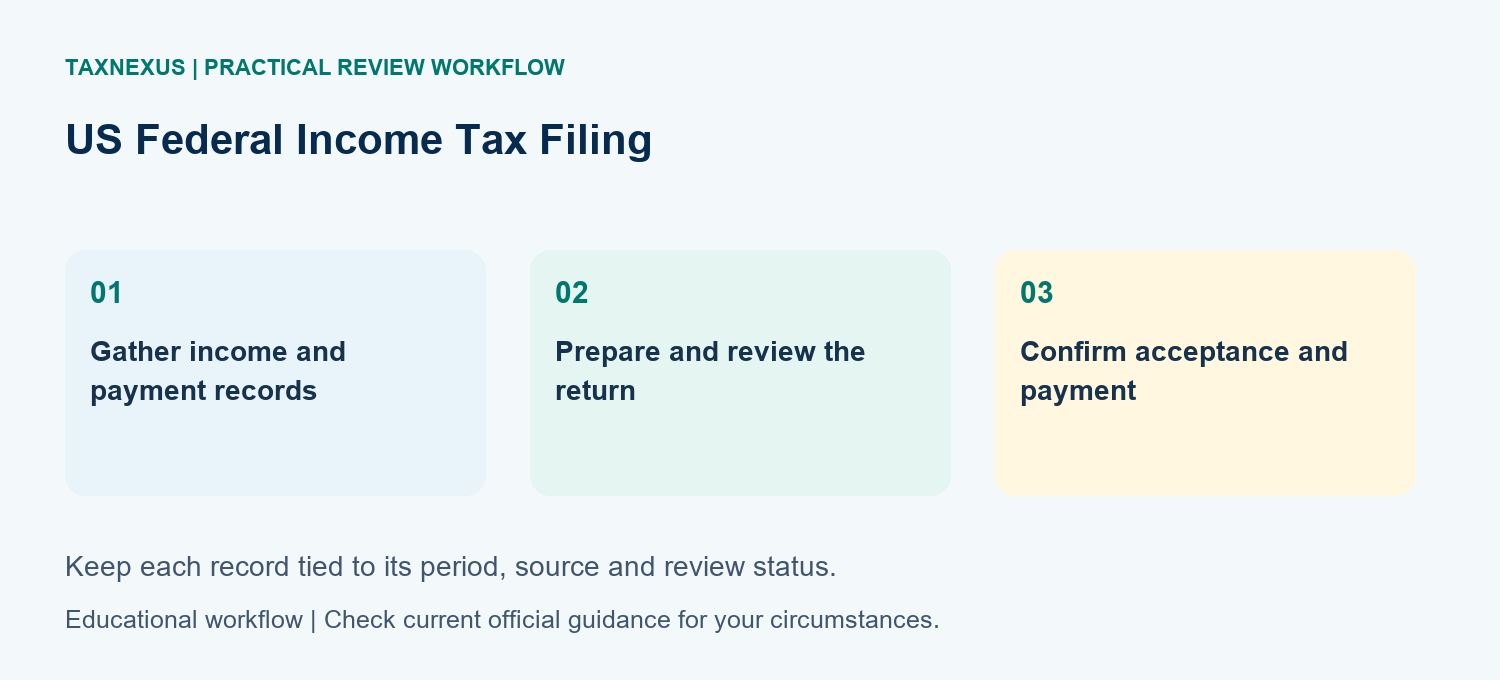
Federal Income Tax Filing
Understand Form 1040, filing preparation, common records and the difference between withholding and a final tax return.
Read the filing guide →Form W-4 & Withholding
Learn when to review withholding and how filing status, additional income, deductions and credits affect Form W-4.
Read the withholding guide →Quarterly Estimated Tax
A practical introduction to estimated payments for self-employment and income not adequately covered by withholding.
Read the estimated-tax guide →Small-Business Bookkeeping
Build a clean recordkeeping system for income, expenses, supporting documents and tax preparation.
Read the bookkeeping guide →Self-Employment & 1099 Tax
A human, practical guide to Schedule C, business expenses, self-employment tax and cleaner records.
Read the self-employment guide →Capital Gains Tax
Understand cost basis, holding periods, capital losses and the records to check before selling.
Read the capital gains guide →Quarterly Tax Planner
Estimate a federal safe-harbor payment target using current-year and prior-year tax information.
Open the US tax planner →OBBBA Tax Savings Calculator
Estimate the 2026 federal income-tax effect of qualified tips, overtime, senior and eligible car-loan-interest deductions.
Open the OBBBA calculator →SALT Deduction Cap Calculator
Estimate your 2026 SALT limit, compare itemizing with the standard deduction and view the possible federal tax effect.
Open the SALT calculator →Pillar Two Top-Up Tax Calculator
Build a simplified jurisdictional estimate of the 15% global minimum tax, SBIE and collection allocation.
Open the Pillar Two calculator →Primary sources
IRS Individual Tax Filing · IRS Tax Withholding · IRS Recordkeeping
US tax resources: choose the right starting point
Use the filing guide when the main task is organising a federal return. Use the withholding guide when reviewing deductions from employment pay. Use the estimated-tax guide when income may not be adequately covered by withholding. These are related workflows, but completing one does not replace the others.
For a business, start with reconciled books before relying on a tax estimate. Separate gross receipts, fees, expenses, owner transactions and supporting documents. A clean bank balance alone does not establish taxable profit or the form the business must file.
Keep the year and jurisdiction visible
US federal guidance is one part of the position. State and local obligations may differ. Read the tax-year label on each calculator and use figures for the supported period. A tool’s default example should not be treated as a statement that the same assumptions fit your household or business.
Use calculators after preparing the records
Begin with complete source information, read the field definitions and record the exclusions. Save the inputs with the output so a later comparison can show what changed. An estimate is more useful when the assumptions are visible than when only the final number is retained.
Do not confuse a deduction with a tax credit, a tax saving with a refund, or a payment target with the final annual liability. The linked guides explain the relevant workflow and point to official material for a fuller review.
Keep a practical follow-up list
Note unresolved documents, questions for payroll or a preparer, and separate filing and payment confirmations. Use current IRS instructions for the final action and retain the records supporting the result. The US directory is an independent educational resource, not an IRS filing service.
Supporting record checks
Estimated tax payments
Gather income and prepayment records, review the annual estimate, and retain payment confirmations. Keep the forecast separate from evidence of completed payments. See the US estimated-tax guide for the full process.
Small-business bookkeeping
Capture source documents, classify and reconcile entries, then review exceptions and retain supporting records. Reconcile the books before preparing tax workings. Follow the small-business bookkeeping guide for practical steps.