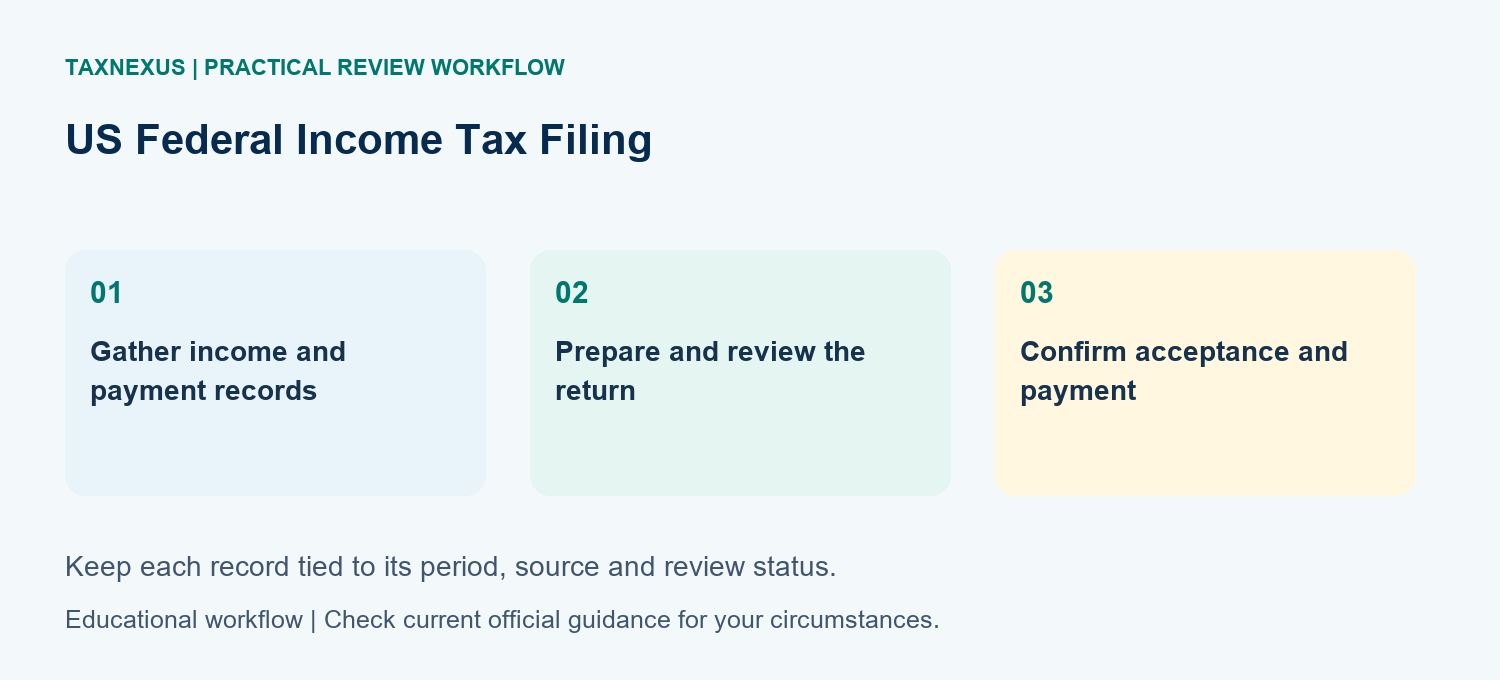
US Federal Income Tax Filing Guide
A practical starting point for preparing and filing an individual federal income-tax return with reliable IRS references.
Quick answer
Most individual federal returns are filed using Form 1040. Gather income statements, deduction and credit records, prior-year information and bank details before you begin. Filing a return reconciles your total tax with withholding and estimated payments already made.
Before you file
- Confirm whether you must file and which filing status applies.
- Collect Forms W-2, 1099 and other income records.
- Gather records for deductions, credits, health coverage and retirement contributions.
- Check the identity details and Social Security numbers for everyone on the return.
- Choose direct deposit details carefully if you expect a refund.
Federal income tax withholding and the final return
Payroll withholding is a prepayment. Your return calculates the final federal income-tax result after reporting income, adjustments, deductions, credits and payments.
Electronic filing
The IRS offers electronic filing options, including IRS Free File for eligible taxpayers. Review the current IRS eligibility and filing information because thresholds and program rules can change.
Records to retain
- Copies of filed returns and schedules.
- Income statements and brokerage tax forms.
- Receipts and supporting documents for deductions or credits claimed.
- Estimated-payment confirmations and withholding records.
- Business or rental records when applicable.
Retention periods depend on the type of item and circumstances. Follow the current IRS recordkeeping guidance and obtain professional advice for unusual transactions.
Federal income tax: build a complete filing packet
Use a checklist based on your own income sources, rather than assuming the first tax document you receive is the last one needed. Collect employment and pension statements, interest and investment documents, business records and evidence relevant to deductions or credits. Keep corrected statements with a note explaining which version replaces the earlier one.
- Confirm the tax year, filing status and whether a filing requirement applies under current IRS guidance. Some people may benefit from filing even when they are not required to do so.
- Compare information statements with your own records. Investigate missing or duplicate amounts before accepting an imported return.
- Reconcile federal withholding, estimated payments and any prior-year credit applied forward.
- Review names, identification details and refund or payment information privately in the filing system.
- Save the final return and acknowledgement. An electronically transmitted return still needs an acceptance check.
Example: a form arrives after preparation
A taxpayer prepares a draft using wages and bank interest, then receives an investment statement before submitting. They pause, reconcile the additional source and update the draft. Keeping a source checklist makes this easier than trying to remember every account. If a relevant corrected statement arrives after filing, review the IRS amendment guidance rather than assuming it can be ignored or automatically requires the same action in every case.
Separate filing, payment and follow-up
Record filing and payment tasks separately and keep confirmation for each. Check current extension instructions: extending the filing deadline generally does not extend the time to pay. Track any rejected electronic submission and resolve it through the filing provider. State returns can have separate requirements. Use the withholding guide to review future payroll payments, and the self-employment guide when business income needs additional schedules. This checklist supports preparation and does not decide a particular taxpayer’s filing position.
A federal income tax checklist should also record who will resolve each missing item and when it was checked. Keep draft figures separate from final supporting documents so an unresolved estimate is not mistaken for a confirmed amount.