Quick answer: Form 26AS mainly shows TDS/TCS information, while AIS (Annual Information Statement) gives a broader view that can also include SFT transactions, tax payments, refunds/demands and other information available with the Income Tax Department.
Before filing your Income Tax Return for AY 2026–27, it is important to compare your books, Form 16/Form 16A, bank statements and investment records with both AIS and Form 26AS. Neither statement should be treated as a substitute for checking your complete income records. After reconciling the information, continue with the ITR filing process for AY 2026–27.
AIS vs Form 26AS: Key Difference
| Particulars | AIS | Form 26AS |
|---|---|---|
| Full form | Annual Information Statement | Annual Tax Statement |
| TDS/TCS information | Yes | Yes |
| SFT information | Yes | Generally available in AIS |
| Tax payments | Yes | 26AS focus is now primarily TDS/TCS |
| Refund / demand information | May be available | Other details have largely shifted to AIS |
| Other reported information | Can include broader information available to the Department | More limited |
| Feedback facility | Yes | No comparable AIS-style feedback workflow |
| TIS summary | Yes | No |
What Is AIS?
AIS is a comprehensive information statement made available by the Income Tax Department. It can contain TDS/TCS details, SFT information, payment of taxes, demand/refund information and other information available with the Department.
- Salary-related TDS information
- Interest reported by banks and financial institutions
- Dividend information
- Specified Financial Transaction (SFT) information
- Tax payments
- Refund and demand details where available
- Other information reported to the Income Tax Department
What Is TIS?
TIS (Taxpayer Information Summary) is the category-wise aggregated summary provided within the AIS system. It is useful for reviewing summarized values, while AIS provides the underlying transaction-level information.
What Is Form 26AS?
From AY 2023–24 onwards, Form 26AS on the TRACES portal primarily displays TDS/TCS-related data. Information that was previously available in 26AS, such as several tax-payment, refund and SFT-related items, is now available through AIS.
Practical Example 1: Salary + Bank Interest
| Source | Your Records | AIS | 26AS |
|---|---|---|---|
| Salary | ₹9,00,000 | Reported | TDS-related information |
| Savings/FD Interest | ₹48,000 | May be reported | Only if relevant TDS is reflected |
| TDS | ₹42,000 | May be shown | Should be checked carefully |
Action: Do not report only what appears in 26AS. Include your complete taxable interest based on your actual records, even if some interest appears only in AIS or is not reflected in either statement.
Practical Example 2: Mutual Fund or Share Transactions
AIS may show securities or mutual-fund transaction information reported by financial intermediaries. The value shown in AIS is not automatically your taxable capital gain. You should calculate the actual capital gain using purchase cost, sale value, applicable expenses and the relevant tax rules.
What If AIS Information Is Wrong?
- Log in to the Income Tax e-Filing portal.
- Open the AIS section from the dashboard.
- Locate the incorrect transaction.
- Use the available feedback option and select the appropriate reason.
- Keep supporting documents such as bank statements, contract notes, Form 16 or Form 16A.
- File the ITR using the correct income figures based on your records and applicable law.
Important: The Income Tax Department states that AIS contains information presently available with it and may not contain every transaction. Taxpayers are still expected to report complete and accurate information in the ITR.
AIS / 26AS Reconciliation Checklist Before Filing ITR
- Match salary with Form 16
- Match bank interest with bank certificates/statements
- Check dividend income
- Review share and mutual-fund transactions
- Verify TDS in Form 26AS
- Check advance tax and self-assessment tax payments
- Review property-related or other SFT transactions, where applicable
- Resolve obvious mismatches and keep supporting records
Step-by-Step: How to View and Download AIS
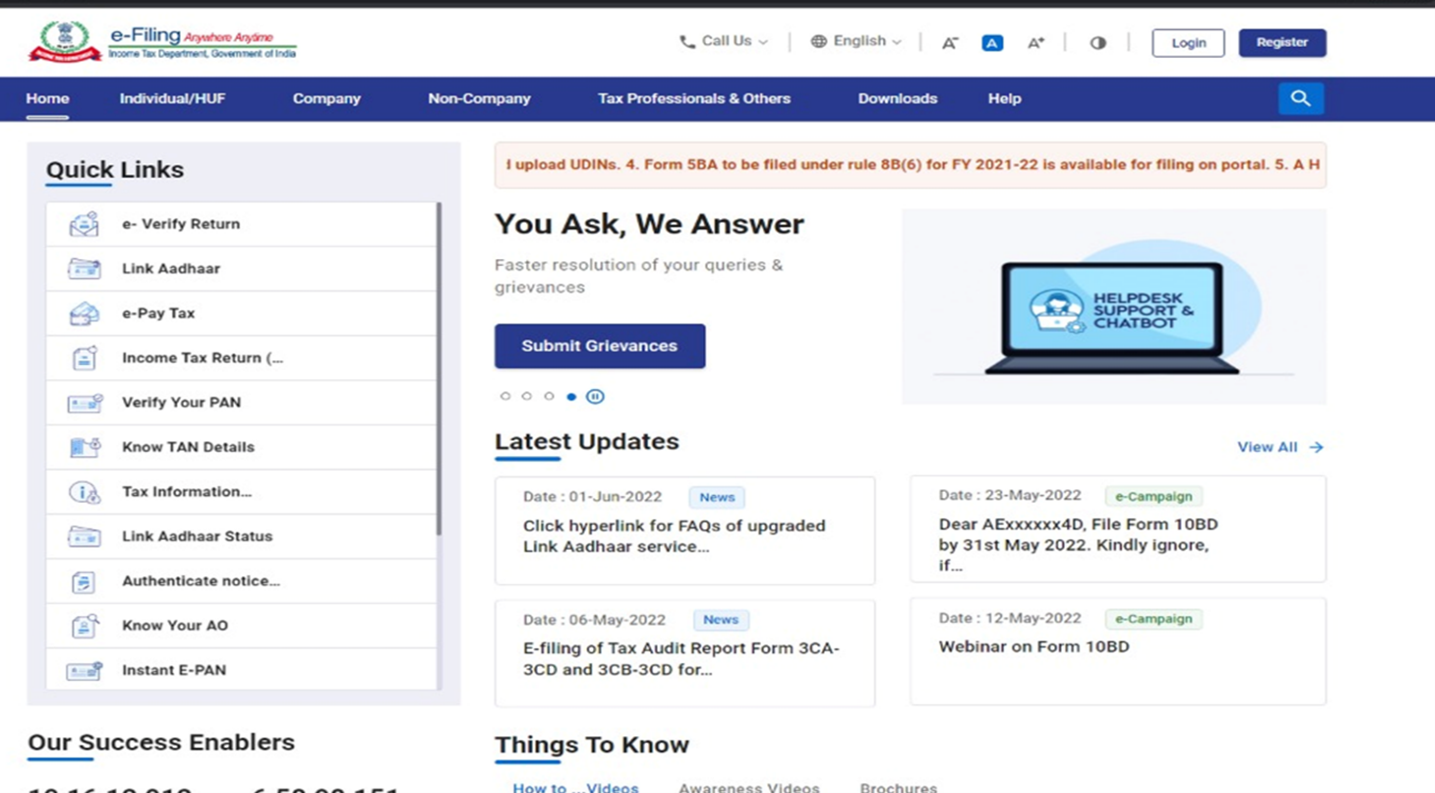
- Visit incometax.gov.in and log in using your PAN/User ID and password.
- On the dashboard, click Annual Information Statement (AIS). Alternatively, go to e-File → Income Tax Return → View AIS.
- Click Proceed. You will be redirected to the AIS portal.
- Click the AIS tile.
- Select the relevant financial year.
- Review the sections for TDS/TCS, SFT, tax payments, demand/refund and other information.
- If required, download AIS in PDF, JSON or CSV format.
Step-by-Step: How to View Form 26AS
- Log in to the Income Tax e-Filing portal.
- Go to e-File → Income Tax Return → View Form 26AS.
- Proceed to the TRACES portal when prompted.
- Select the relevant assessment year.
- Review the TDS/TCS entries deductor-wise.
- Match the PAN, deductor name, amount paid/credited and TDS/TCS amount with your Form 16/Form 16A and records.
Step-by-Step AIS and 26AS Reconciliation
Your Records → Form 16/16A → AIS → Form 26AS → Identify Difference → Correct / Give Feedback → File ITR
| Income / Tax Item | Your Records | Form 16/16A | AIS | 26AS | Action |
|---|---|---|---|---|---|
| Salary | Check payslips / annual salary statement | Match gross salary and TDS | Match reported salary | Match TDS | Investigate any difference |
| Bank Interest | Check bank certificate / statement | Check Form 16A if TDS deducted | Match interest information | Check TDS if applicable | Report complete taxable interest |
| Dividend | Check broker / bank statement | Check Form 16A if applicable | Match reported dividend | Check TDS where applicable | Report actual taxable amount |
| Shares / Mutual Funds | Use contract notes / capital-gain report | Usually not applicable | Review reported transactions | Usually limited relevance | Calculate actual capital gain |
| Tax Paid | Check challan / payment receipt | Not applicable | Review tax payment data | 26AS now mainly shows TDS/TCS | Ensure credit is available |
Example 3: TDS Mismatch
Suppose your Form 16A shows interest income of ₹80,000 and TDS of ₹8,000, but Form 26AS shows only ₹6,000 of TDS. First check whether the deductor has deposited and reported the full TDS correctly. If the deductor’s statement is wrong or incomplete, request the deductor to file a correction statement. Claiming TDS that is not properly reflected can lead to a mismatch or processing issue.
Example 4: Duplicate or Incorrect AIS Entry
If the same transaction appears twice in AIS, or the amount is incorrect, compare it with your supporting records. Use the AIS feedback option for the relevant transaction, choose the appropriate feedback reason, submit it and retain the acknowledgement.
Step-by-Step: How to Submit AIS Feedback
- Open the relevant transaction in AIS.
- Click the available Feedback option for that information.
- Select the appropriate feedback reason.
- Enter the required details and submit the feedback.
- Review the modified / accepted value shown in AIS where applicable.
- Open Activity History and download the acknowledgement receipt for your records.
Tip: AIS feedback helps communicate a mismatch to the Income Tax Department, but you should still keep documentary support for the amount ultimately reported in your ITR.
Frequently Asked Questions
Is AIS the same as Form 26AS?
No. AIS provides a broader set of information, while Form 26AS mainly focuses on TDS/TCS information.
Should I file my ITR exactly as per AIS?
No. AIS is an important reconciliation source, but you should file using complete and accurate information based on your own records and the applicable tax rules.
What if income is missing from AIS?
You should still report taxable income that is required to be disclosed even if it is not shown in AIS.
Related Guides
- How to File ITR Online Step by Step – AY 2026–27
- ITR-1 vs ITR-2 – Which Form Should You File?
- Old Tax Regime vs New Tax Regime – AY 2026–27
Official References
Disclaimer: This article is for general educational information and not individual tax advice. Always verify your own records and the latest official guidance before filing your return.