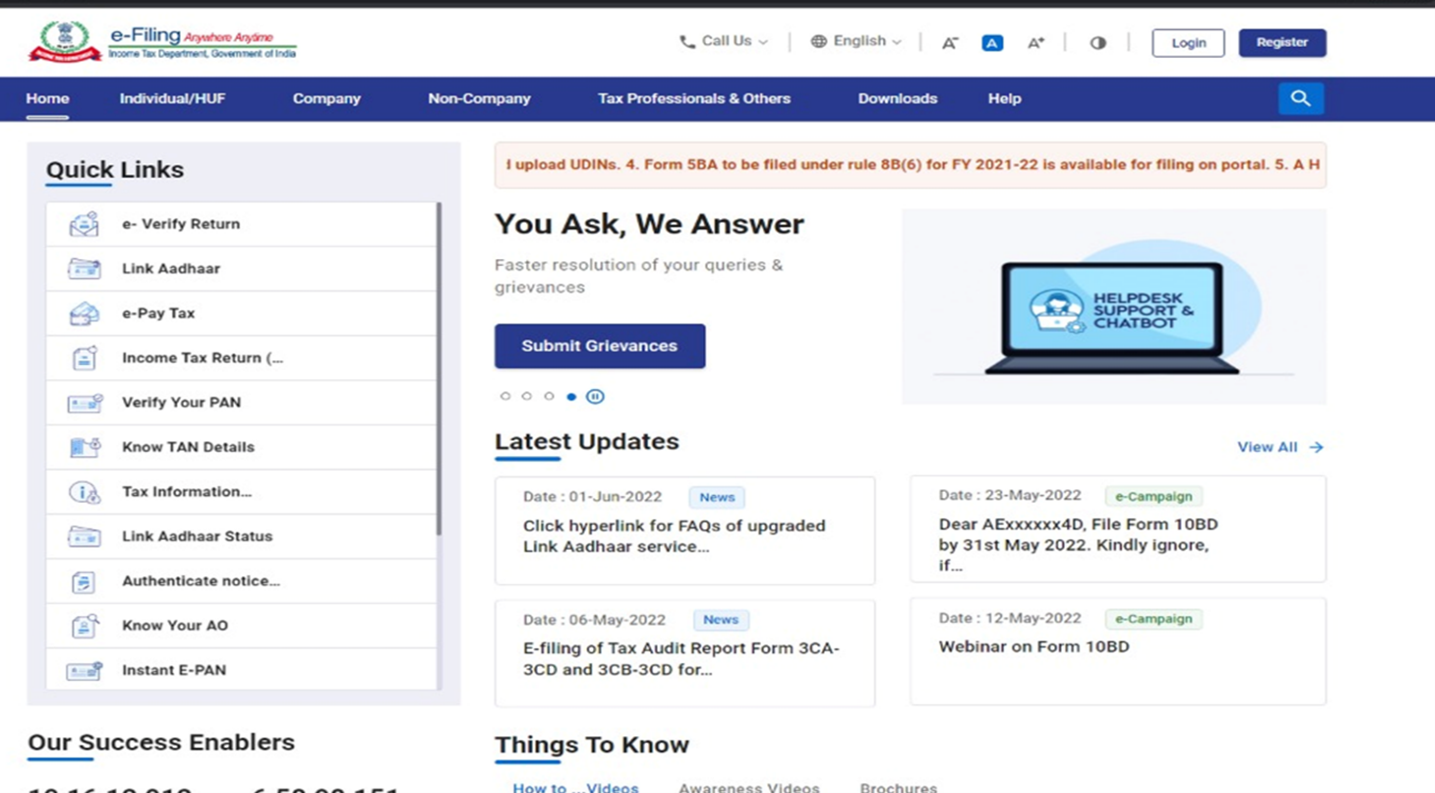
AY 2026–27: The new tax regime is the default. Eligible taxpayers can opt for the old tax regime, but the better choice depends on your income, deductions, exemptions and other facts.
This guide compares the Old Tax Regime vs New Tax Regime for AY 2026–27 (FY 2025–26) with current slab rates, rebate limits, common deductions and practical examples. After choosing the applicable regime, see our ITR filing guide for AY 2026–27.
New Tax Regime Slabs for AY 2026–27
| Taxable Income | Tax Rate |
|---|---|
| Up to ₹4,00,000 | Nil |
| ₹4,00,001 – ₹8,00,000 | 5% |
| ₹8,00,001 – ₹12,00,000 | 10% |
| ₹12,00,001 – ₹16,00,000 | 15% |
| ₹16,00,001 – ₹20,00,000 | 20% |
| ₹20,00,001 – ₹24,00,000 | 25% |
| Above ₹24,00,000 | 30% |
For resident individuals, rebate under section 87A in the new regime can be up to ₹60,000 where taxable income does not exceed ₹12 lakh. Health and Education Cess of 4% applies on income tax plus surcharge, if any.
Old Tax Regime Slabs for AY 2026–27
For an individual below 60 years of age, the old-regime slab rates are:
| Taxable Income | Tax Rate |
|---|---|
| Up to ₹2,50,000 | Nil |
| ₹2,50,001 – ₹5,00,000 | 5% |
| ₹5,00,001 – ₹10,00,000 | 20% |
| Above ₹10,00,000 | 30% |
For resident individuals under the old regime, rebate under section 87A can be up to ₹12,500 where taxable income does not exceed ₹5 lakh.
Old vs New Tax Regime: Quick Comparison
| Point | Old Regime | New Regime |
|---|---|---|
| Default regime | No | Yes |
| Tax slabs | Higher rates at lower thresholds | More slab bands with lower rates |
| Section 80C | Available, subject to conditions | Generally not available |
| Section 80D | Available, subject to conditions | Generally not available |
| HRA exemption | Available if eligible | Generally not available |
| LTA exemption | Available if eligible | Generally not available |
| Standard deduction for salary | ₹50,000 | ₹75,000 |
| 87A rebate threshold | Taxable income up to ₹5 lakh | Taxable income up to ₹12 lakh |
Who May Prefer the New Tax Regime?
- Salaried taxpayers with relatively low deductions and exemptions
- Taxpayers who prefer simpler tax calculations
- Taxpayers whose taxable income falls within the lower new-regime slab rates
- Resident individuals eligible for the higher section 87A rebate in the new regime
Who May Prefer the Old Tax Regime?
- Taxpayers claiming substantial deductions under sections such as 80C and 80D
- Employees receiving eligible HRA or LTA exemptions
- Taxpayers with eligible home-loan interest and other deductions available under the old regime
Important: There is no one regime that is best for everyone. Compare the tax payable under both regimes using your actual salary, exemptions, deductions, house-property income and other income.
Can You Switch Between Old and New Tax Regimes?
In non-business cases, eligible taxpayers can exercise the option each year directly in the ITR, subject to filing within the applicable due date. Taxpayers with eligible business or professional income have different switching rules and may need to furnish Form 10-IEA within the prescribed time.
Old vs New Tax Regime Calculator Examples
The following examples are illustrative salary-only comparisons for an individual below 60 years, using AY 2026–27 slab rates and 4% Health & Education Cess. They ignore surcharge, special-rate income and other adjustments.
Example 1: Gross Salary ₹10,00,000
| Particulars | Old Regime | New Regime |
|---|---|---|
| Gross Salary | ₹10,00,000 | ₹10,00,000 |
| Standard Deduction | ₹50,000 | ₹75,000 |
| Other eligible deductions/exemptions assumed | ₹1,50,000 | Nil |
| Taxable Income | ₹8,00,000 | ₹9,25,000 |
| Tax + 4% cess | ₹75,400 | ₹0 |
Result: In this illustration, the new regime gives the lower tax because the taxable income is within the section 87A rebate limit.
Example 2: Gross Salary ₹15,00,000
| Particulars | Old Regime | New Regime |
|---|---|---|
| Gross Salary | ₹15,00,000 | ₹15,00,000 |
| Standard Deduction | ₹50,000 | ₹75,000 |
| Other eligible deductions/exemptions assumed | ₹3,00,000 | Nil |
| Taxable Income | ₹11,50,000 | ₹14,25,000 |
| Tax + 4% cess | ₹1,63,800 | ₹97,500 |
Result: In this illustration, the new regime is lower by about ₹66,300.
Example 3: Gross Salary ₹20,00,000 with Higher Old-Regime Deductions
| Particulars | Old Regime | New Regime |
|---|---|---|
| Gross Salary | ₹20,00,000 | ₹20,00,000 |
| Standard Deduction | ₹50,000 | ₹75,000 |
| Other eligible deductions/exemptions assumed | ₹7,00,000 | Nil |
| Taxable Income | ₹12,50,000 | ₹19,25,000 |
| Tax + 4% cess | ₹1,95,000 | ₹1,92,400 |
Result: Even with ₹7 lakh of assumed old-regime deductions/exemptions, the new regime is slightly lower in this example. This shows why an actual calculation is important instead of choosing based only on deduction amounts.
Quick Calculator Formula
Old Regime Taxable Income = Gross Total Income − old-regime exemptions/deductions − applicable standard deduction.
New Regime Taxable Income = Gross Total Income − deductions specifically permitted under the new regime − applicable standard deduction.
Apply the relevant slab rates, then rebate/marginal relief where eligible, and add 4% Health & Education Cess.
Note: These are educational examples. Actual tax can change because of HRA calculation, home-loan treatment, capital gains, interest, deductions, marginal relief, surcharge and other provisions.
Frequently Asked Questions
Is the new tax regime compulsory?
No. It is the default regime, but eligible taxpayers can opt for the old regime subject to the applicable rules.
What is the new regime rebate limit for AY 2026–27?
For eligible resident individuals, section 87A rebate can be up to ₹60,000 where taxable income does not exceed ₹12 lakh.
Is standard deduction available in the new tax regime?
Yes. For salary income, the standard deduction is ₹75,000 under the new regime for AY 2026–27. Under the old regime, the corresponding standard deduction is ₹50,000.
Related Guides
Official Reference
Income Tax Department – Salaried Individuals for AY 2026–27
Disclaimer: This article is for general educational information and not individual tax advice. Tax treatment depends on your complete facts and applicable law. Check the latest official instructions before filing.